

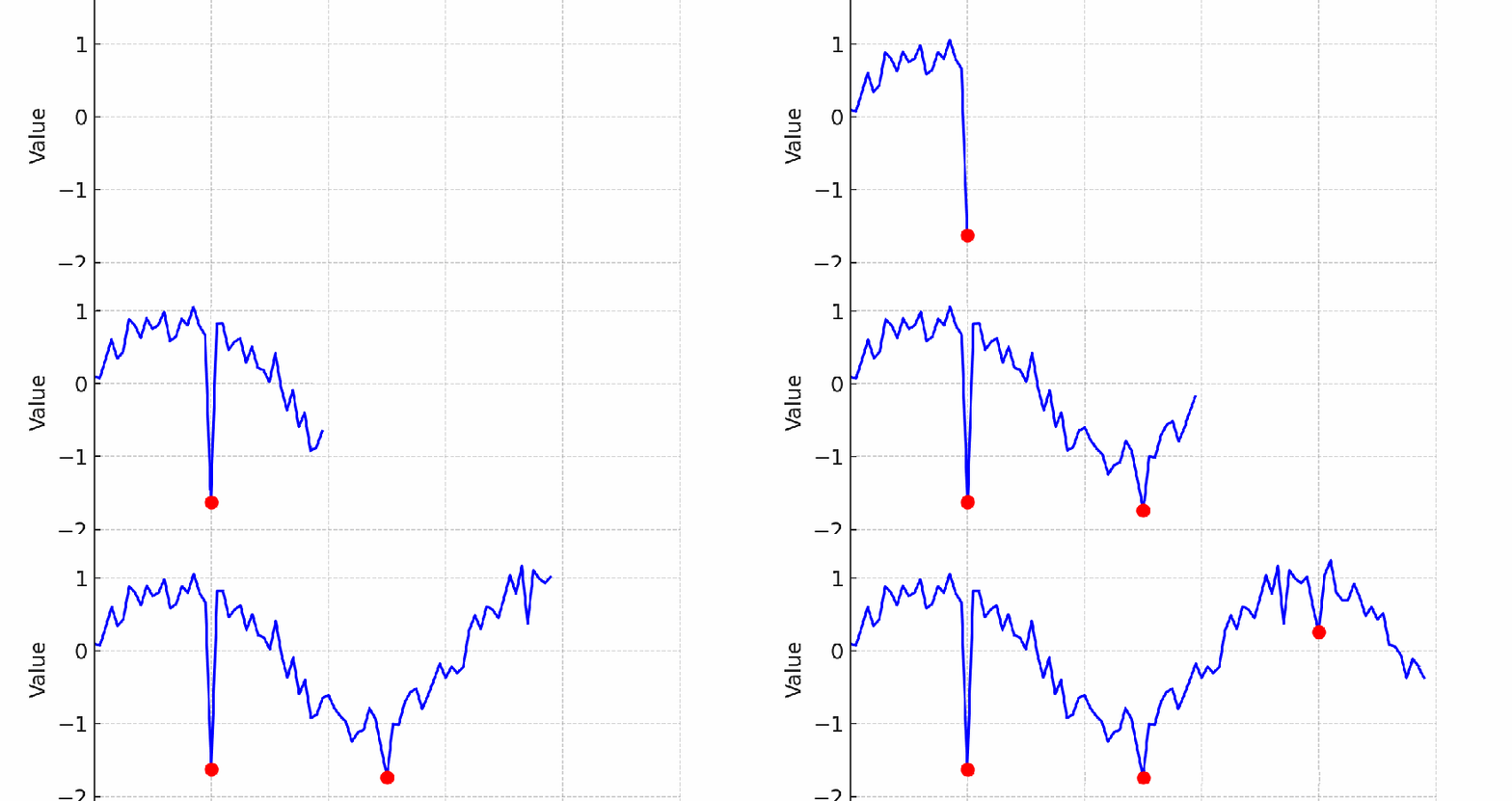
Time series foundational models like UniTS and TimesFM are trained on massive, diverse datasets and show promising results in anomaly detection. Surprisingly, even general-purpose LLMs (like GPT) can detect anomalies effectively; without any domain-specific pretraining.
But here’s the reality check:
🔹 LLMs are not always superior to traditional models like ARIMA. In fact, classical statistical models still outperform them in some cases—especially when data is clean and patterns are well-understood.
🔹 Pretrained pipelines like Orion reduce the cost of training from scratch, enabling faster deployment. However, real-time efficiency remains a challenge.
🔹 SigLLM, which converts time series into text for LLM input, is innovative—but rolling window representations make it computationally expensive.
🔹 Despite limitations like context window size and slow inference, LLMs are still flexible enough to be competitive. But they don’t consistently outperform classical models across the board.
👉 The bottom line: LLMs are not a silver bullet. The most effective strategy is often hybrid, combining classical statistical techniques with foundation model strengths.
Are LLMs the future of time series modeling—or just another wave of AI hype?
Let’s discuss.
#AI #TimeSeries #AnomalyDetection #LLMs #FoundationModels
📄 Thesis by Linh K. Nguyen (MIT)
 Ever wan·der