One of the workers on the diving boat was getting ready to have lunch. He smiled and invited me to join. His invitation was so sincere, that I couldn’t resist it. His eyes communicating nothing but friendship, that of a brother to his own. I opened up his newspaper-wrapped lunch packet. The smell of basmati and spices added to the spectacular view of the coast of Nusa Penida, a small island off the coast of Bali, Indonesia. I took one bite of his yellow rice and his buddy walked over and offered me another packet.
As I was unraveling his royal feast, wrapped in a common newspaper, I noticed that he was sitting at the back of the boat, with a smile, looking out into the clear blue ocean.
That’s when I realized that he has just offered me his lunch!
Then it hit me. I was in Asia. Where roots of hospitality has run in the hearts and veins of people for thousands of years. The experience made me realize that I cannot enjoy their land and its fruits without respecting their way of life and their sincere smiles.
Wealth in this part of the world is stored in the hearts and souls of the people. People’s hearts are made of gold there. They don’t have fancy cars and luxury suites. They eat their rice with bear fingers and don’t think twice about offering their meal to a total stranger.
The reality, today, is dominated by a materialistic ideology, enforced by imperialistic attitudes. In this system, these kind-hearted islanders can only be great hosts to tourists that work in the “developed world”.
A taxi driver in Asia cannot goto the west and afford to take a taxi to see the Eiffel Tower. But a taxi driver in the West can come to Asia and afford the luxuries only the wealthy in the East can afford. Even though they both do the same job, one is able to experience luxury, while the other has to deal with bargaining tourists all day to make a living.
Let’s not forget to look at the whole picture when discussing ideas. Equality is not only about gender, race or religion. Development is not only the measure of external possessions, but also the development of the mind and the heart.
Indonesians have hearts of gold. As I walk these streets, I see wealthy individuals that have no gold to show but smiles to offer.
At first, he thought, wow this is an amazing skill to have. So, he went into restaurants and started listening to conversations. It was quite entertaining at first. Then, he started using his skill for his advantage. He patted himself in the back when he got what he wanted. He thought, “Huh, they have no clue that I know what they think”.
A few years passed by. He had now gotten tired of using his skill for his benefit. Now he was simply observing others. He started diving deep into his interactions. He analyzed the thoughts that were going through someone’s head when they were speaking to him. He tried to give them what they wanted or what they wished for.
One day, he was hanging around some friends and felt extremely uncomfortable. He could no longer just enjoy life. He was constantly concerned about what someone else was thinking; what they were going to say to another person about him or someone else. His life was suddenly filled with other people’s thoughts. His own thoughts were now drowning.
For the first time since his realization, he felt burdened. What once felt like a blessing now weighed him down like a curse. He looked around him and saw thousands of people that couldn’t read minds. They were just happy to live based on what they saw and heard. They had no clue that sometimes their loved ones were not being honest.
Then he wished that he couldn’t read minds. He wanted to be normal. Years passed by. He found himself getting farther and farther away from civilization. He just couldn’t deal with the make believe comments and conversations anymore. One day, he met an old man. He asked him “Son, how are you?” He realized that this man was sincerely interested to know how he was doing. He shared his experience with the man and explained why he was living in the outskirts of civilization.
The old man smiled and said “I was like you once. I too got tired of reading other peoples’ minds.” The mind reader was excited. He wanted to know how to deal with it. The old man said that he simply decided to not read other peoples’ minds one day. He said that he realized even when he read someone’s mind; he still enjoyed listening to what the other person had to say. Words, he said have power. It still takes effort to make a thought into audible, comprehendible sounds. He left the man with the poem below and said “Go back to the city if you want. It’s not as bad as you think. You have two ears. Keep them clean. Don’t let what you don’t like stick in between. Listen from one and let it go from the other.”
This cute little thing came crashing down and fell on the couch right behind me at this quaint coffee house in Rishikesh India. I was having a cup of coffee with a sweet Brazilian couple I met at the yoga school I will attend next week, when Jeanie said “oh my I think she didn’t see the glass”.
I’ve always had a sweet spot for animals and have rescued a few as a kid. So naturally, I was drawn to do something for the poor bird. Jeanie is a very kind hearted person, she was right there with me as I grabbed a newspaper that was on the table to get the injured bird outside, in case it tries to fly inside the coffee house and run into more trouble.
It was apparent that it hurt its feet in the process of crashing into the window. They looked crooked and unusual. I asked the waiter to bring us some water. The bird had its mouth open, and a closer look made me feel as if it was in shock. So, I figured some water might help. Jeanie’s kindness was so admirable. She was holding a napkin over the bird to keep away the sunlight.
It was apparent that the bird didn’t have the senses to reach into the bowl to get water, so I let some water drop from my fingertip.
Voila!
The bird was drinking the water!
It gave us both hope. We couldn’t help but have compassion for this beautiful creature as we caressed it gently with love, wishing for it to get better. Jeannie was constantly telling positive things to the bird and it was so pleasing to my ears as well. After a while, the bird closed its mouth, so I stopped offering it water. We got the waiter to bring us some rice hoping that it would eat it.
A few minutes passed as we both intensely stared at this beautiful bird with nothing but kindness and well wishes. Little by little, it appeared that the bird was regaining its senses. A feeling of utter joy entered my heart every second as I watched it turn its tiny head from one side to another. To me, it seemed like it was now observing us: two strangers staring at it, offering it water.
Jeanie said, “It’s amazing how this bird is trusting us”. I said, “I think animals can sense what we feel towards them”. A minute or two later, it attempted to fly. It wasn’t that successful as it landed a few inches from the table. We were very optimistic. We said “agh, its getting better, look! The feet doesn’t seem to be crooked anymore!”
The bird flew away with elegance a minute later and landed on a near by tree. We high five’d as Jeanie said, “yay, we did it”. Pure bliss and peace filled my mind. There’s so much joy in helping someone for in and of itself. There were no heroes in that moment. There was only that moment. That shared experience.
In this materialistic world, everything seems to be some sort of transaction. Sometimes happiness is doing something for someone that can never return the favor. I was the one that was blessed by the opportunity to experience that moment. To watch a beautiful bird fly again.
Perhaps nothing I did contributed to it. Perhaps it had everything to do with the love Jeanie and I showed it. But it’s not about that. It’s about that split second. That split second that we saw the bird fly again. That rush of bliss that entered our hearts. That … is worth everything. It was not forced, staged or had any sort of ulterior motive.
A trained eye knows the value when they find a gem in the rough, covered in mud. We all have gem like qualities, talents covered in mud, waiting to be found. Perhaps they have been found and are now getting polished. Maybe they are already found, polished and ready to be adorned by the person that’s truly seeking it.
Whatever phase we may be in, we shouldn’t get frustrated.
The caterpillar will eventually turn into a butterfly and fly away.
Life will look different then. Your perspectives will change and new possibilities will open up when you flutter your wings. The “oh no’s” will change to “oh my’s”. Then you will appreciate the time you spent in the mud even more.
There’s beauty in everything. If we remember to be mindful, we can appreciate each stage instead of drowning in hopelessness.
There’ll be enough hands along the way that will toss you around because they won’t see your value through the mud or the inclusions. Those tosses are not your failures. They are THEIR mistakes. Through that, harden yourself and embrace your natural tone. A gem’s value increases with its hardness. It’s also more fitting for it to be in the hands of someone that appreciates and knows what they have when they wear it.
Remember, a monkey won’t know the difference between a gem and an ordinary rock. But a princess does.
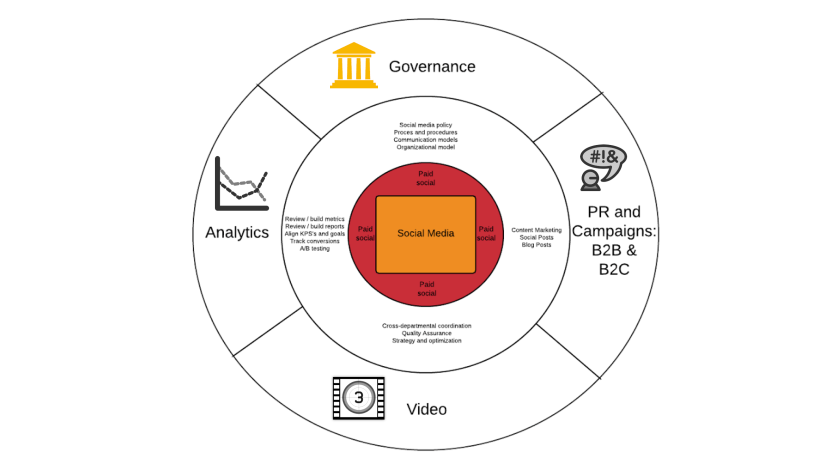
Social media, in many ways, is where the public meet the company face-to-face (digitally).
It is also where a company’s achievements, leadership, and influence should permeate, especially since digital activity on mobile devices (where social media dominates), has been increasing rapidly.
Over the past few years, we have seen massive growth, both in audience expansion as well as engagement, driving traffic to other web resources, and most importantly, leads.
In order to capitalize growth and build a strong presence in digital for the future, I propose the following organizational structure and strategy.
With a rainbow-colored Mohawk and numerous tattoos and body piercings, including on his tongue, just about everyone at the Mercyhurst Police Academy in Erie, PA figured Mark Rayman, fresh out of high school, would wash out quickly.
Though the unruly teenager learned to adapt –“Mark had to tone down his style and opinions enough to fit into police work,” says his wife, Melinda – the tobacco-chewing cop is still regarded as something of a rebel among his fellow officers at the Little Elm Police Department after three and a half years on the job.
“I don’t think he likes to ‘go along to get along’ if you know what I mean,” says Mark’s field training officer, Sgt. Drew Mitchell. “The good side of this is that he relates so very well to many walks of life that others can’t. There are segments of our society that Mark can communicate with that I could never.”
One night, for example, the two officers stopped a group of mischievous teenagers whom they thought “were up to no good.” But instead of hauling the juveniles down to the Little Elm police station for questioning, Patrol officer Rayman, who stands 6 foot four and weighs 210 pounds, jumped on one of their skateboards and performed a few tricks, dazzling the teenagers.
His methods of handling troubled teenagers, says Sgt. Mitchell, have earned Officer Rayman a reputation as “being honest, fair and someone they can trust.” It’s also earned him the respect of his fellow officers. His ability to relate to teenage crowd“ is very valuable in our business and can help us get information in critical times,” says Sgt. Mitchell.
Not that the patrol officer is a pussycat around teenagers. On a recent patrol in Little Elm, Officer Rayman spots a young female driver at a gas station, hip hop blasting from her car speakers. The driver and her passengers aren’t wearing seat belts and toddlers in the back seat aren’t strapped into their car seats. Officer Rayman wants to know why. But the young lady, exuding a haughty air, acts as if she can’t hear Officer Rayman. That triggers a stern lecture from the policeman.
“Why do I have to hear your music?” he growls. “You can’t hear what I am listening to from my car, do you?”
Officer Rayman calls her mother on the phone, and waits for her arrival. As soon as she arrives at the gas station, the mother realizes her daughter is out of line and may be on the brink of getting a citation and fine. She admonishes her daughter and assures Officer Rayman she’ll be wearing her seatbelt and her passengers will be wearing their seatbelts from now on.
Officer Rayman, persuaded the mother will keep her pledge, lets the daughter and her passengers drive home without a citation and fine. Making sure teenagers wear seat belts has become one of his missions, he says, ever since he witnessed a terrible accident that killed a North Texas teenager, an event that has haunted him ever since.
“I-Don’t Wear A Seatbelt” Policy
The only person excluded from the officer’s “must-wear-a seatbelt” policy is Officer Rayman himself. “I don’t wear a seatbelt,” he tells a passenger while cruising on a dark and narrow road leading toward Little Elm one evening. “But I promise that we won’t be crashing tonight.”
His wife, Melinda, would say her husband’s “I-don’t-wear-a-seatbelt” declaration is a vestige of his rebellious youth. Though he’s now 41 and wears a well-ironed uniform and shiny shoes, “inside he is still the same old punk rock loving, fiercely independent, Pittsburgh boy,” she says.
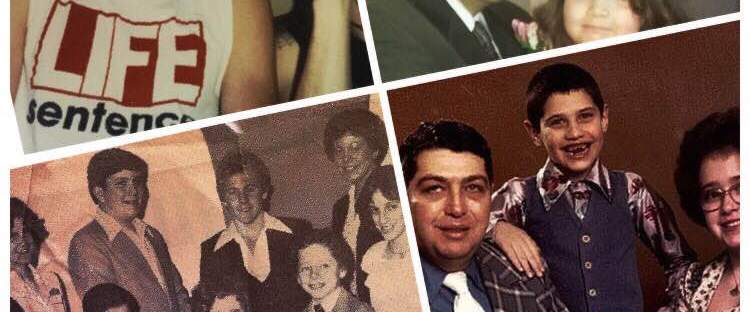
Indeed, from the day he was born, Mark seemed to defy all manner of convention and conformity. He was born in a hospital hallway in Pittsburgh, not the maternity ward, because the staff didn’t believe Mark’s mother when she howled that her baby was coming out in the elevator. It wasn’t the first incidence of bad timing involving Mark’s birth. Mark’s mother vowed not to have any more children after her daughter was born with spina bifida. But she got pregnant just before Mark’s father had a vasectomy.
In school, Mark struggled, badly. Some of his teachers and many of his classmates thought he was either lazy or stupid. He frustrated his teachers with his poor reading skills and misspellings of even simple words. He’d reverse letters such as “d” for “b’, reverse the spelling of words such as “tip” for “pit” and invert letters such as “m” for “w” and “u’ for “n.” No one knew for sure what exactly was wrong with Mark, but everyone, including Mark, knew something was wrong with him. It wasn’t until years later that he would learn, from his future fiancé, that he suffered from a common learning disorder called dyslexia.
But outside the classroom, in the water, Mark was special. He could swim like a dolphin. At age five, he caught the attention of a coach who watched Mark propel himself across the pool like he was powered by a mercury engine. Before long, Mark was winning medals at the local, state and national levels. He was recruited by the swimming coach to attend Pine Crest Academy outside of Fort Lauderdale, FL, a prestigious high school well-known for developing Olympic caliber swimmers. His first year at Pine Crest, Mark set a record in the 100-meter backstroke.
But Mark left Florida and moved to North Huntington, PA after his father contracted stage 4 lung cancer. His father, a heavy smoker, died in December of 1997. At Norwin High School in North Huntingdon, Mark once again left his swimming coaches slack-jawed by his speed. During a state swim meet, Mark injured his right knee, strapped on a brace and still won first place. And he still holds the record in 100-meter backstroke at Norwin after 20 years.
Besides swimming, Mark loved music. Ever the maverick, Mark was attracted to the hard-edged, anti-establishment lyrics and the “I-don’t-care” attitude of punk rock. Mark taught himself to play drums and joined several punk bands, including Aus Rotten, that has since become an internationally famous punk rock band.
In 1993, Mark enrolled at Gannon University in Erie, PA. At Gannon, he joined the Pi Kappa Alpha fraternity, spending most of his time partying, playing pranks, drinking and running afoul of school administrators for everything from fighting to smashing a pumpkin.
Then Melinda moved into an apartment next door to Mark’s fraternity house. She was 24, a pretty brunette that attracted Mark’s attention and held it – even after he learned she was engaged. They became fast friends. But as Melinda recalls, “it wasn’t long until I had dumped my fiancé and Mark (dumped his) and I started hanging out as more than friends.”
Melinda thought Mark was bright, and was puzzled why he seemed to struggle academically. At the time, she was studying to become a school psychologist and convinced Mark to let her administer some special tests. She discovered that Mark suffered from dyslexia.
Melinda says the dyslexia findings “seemed to reinvigorate his spirit for school and learning.” After struggling with the English language for years, Mark decided to learn a foreign language and began studying Spanish.
Five years after they began dating, Melinda and Mark married in 2000. Today, they have three children. Mark’s eldest son, Connor, 14, bears a striking resemblance to his dad, and even walks and talks like him. Mark’s second son, Seth, 9, inherited his father’s unruly personality. Melinda often needles Mark, “See, I told you I would have my revenge when you had a son just like you.” Their three-year-old daughter, Aliya, resembles Melinda.
Melinda believes she knows Mark better than he knows himself. She says Mark tries to portray himself “as an unemotional, detached military type of guy, but underneath is a man with a very big heart.”
Showing Mercy to a Thief
Officer Rayman’s “big heart” was exposed in a recent encounter with a resident of Little Elm whom he suspected of selling stolen hockey and gym equipment. Officer Rayman drove to the thief’s house to confront him.
“So, this stuff isn’t stolen, right?”
“No way,” replied the thief.
“Well, that is interesting you say that because I think you are lying.”
The thief, rattled by Mark’s accusation, admitted to everything.
But instead of arresting the thief and charging him with selling stolen merchandise, Officer Rayman told him to stop stealing, handed him $20 and encouraged him to straighten out his life. The thief “thanked him profusely,” says Melinda.
Working in Pittsburgh, Officer Rayman also gave a boxer a break once. Melinda says he caught him stealing – a crime that, if found guilty, would have landed him in jail and ended his career. But Officer Rayman gave him a chance to redeem himself, and he did. “He’s now a pretty successful boxer from what Mark says,” according to Melinda. “He told Mark that he changed his life.”
Sgt. Mitchell, Mark’s field-training officer, agrees with Melinda. “Mark is one of the more genuinely caring people on this department. He doesn’t want or need praise but just does what he thinks needs to be done.”
Even though Officer Rayman may not seek praise, he’s earned high honors and distinction in all the police departments he’s been associated with during his 13-year career. Officer Rayman’s first job doing police work was in the McKeesport, PA. Police Department, where he worked for 10 years and was honored as a member of Allegheny County Narcotics Team. He is also a Certified Mountain Bike officer, SWAT certified, and Water Rescue Certified.
Officer Rayman has been with The Little Elm Police Department since July 2009. The department is made up of 36 sworn officers and around 10 civilian officers. The department deals with everything from family violence to sexual assault to drug-related offenses. Officers say they have their hands full dealing with calls from residents for every type of crime. From February 2012 to April 2012 (the latest period for which figures are available), all calls for service rose 17% and total arrests rose 59%.
But traffic citations dropped 39% during the same period, which may explain why Officer Rayman seems to relish nabbing speeders in his town. He pulls over to the side of the road and points to his radar screen, hoping it will light up with drivers ignoring the 45 mph speed limit on the street. “Come on! Do a 55,” he says, the 10-mile-over-the-limit threshold he’s set tonight for pulling over speeders.
Officer Rayman turns his radar on as vehicles draw closer to his patrol car. This ensures that even drivers with radar detectors do not have enough time to slow down before they’re caught on radar speeding. But as time speeds by sitting on the side of the road, the cars don’t. Finally, Officer Rayman spots a car roaring past the 55 mph threshold the officer has established for earning a ticket.
His lights flashing, Officer Rayman pulls over the car. It’s a Dallas Police officer. They exchange pleasantries and wave good bye. The officer says he’s not about to give a ticket to one of his own. A few minutes later, he chases down another speeder. He gets out of his patrol car with a citation in hand. Unfortunately, it’s a fireman and Officer Rayman feels obliged to let him go, too.
Tonight’s speed trap hasn’t caught any drivers, which disappoints Officer Rayman’s ride-along passenger. Overall, it was a rather dull night of patrol work. But there are other ways to see Officer Rayman’s devilish ways on display. The officer’s Facebook profile shows Jesus with a gun in his right hand and a bottle of wine on his left.
Does Officer Rayman’s Facebook page fairly represent a cop who can’t conform to the conservative, buttoned-down persona of a policeman? His wife certainly thinks so. “He is a tiger who loves his stripes and sees no need to change them for anyone,” she says. “He has always been a skateboarding, Vans wearing, ball cap wearing type of guy and that has never changed.”
Special Contributor to The Denton Record-Chronicle (Getschow edited).
Besides swimming, Mark loved music. Ever the maverick, Mark was attracted to the hard-edged, anti-establishment lyrics and the “I-don’t-care” attitude of punk rock. Mark taught himself to play drums and joined several punk bands, including Aus Rotten, that has since become an internationally famous punk rock band.
Framing plays an important role in the age of media overload. Yet, there is a lack of a clear definition for framing theory. However, there are quite a few academic studies that analyze how framing is used by public relations professionals and the news media. In news media and public relations practices, frame holder’s strategically attempts to influence and shape how audiences perceive and comprehend situations, events, and products through persuasion, inclusion or exclusion of facts (Hallahan, K. 1999; Lim, J., & Jones, L. 2010; Lundy, L. K. 2006;Waller, R. L., & Conaway, R. N. 2011; Schultz, F., Kleinnijenhuis, J., Oegema, D., Utz, S., & van Atteveldt, W. 2012).
“Frames are designed to deliberately reconstitute selected aspects of reality surrounding deliberation of a public issue. In essence, a frame binds together carefully chosen ideas, information, judgments, arguments, claims, and value statements into a tightly compressed noetic narrative that guides the frameholder’s interpretation of events as well as discourse related to a given topic (Entman, 2007; Price, Tewksbury, & Powers, 1997; Schlechtweg, 1996)” (Waller, R. L., & Conaway, R. N. 2011, p. 87).
Framing and interpretation
Since frames carry the framholder’s interpretation, parties with different points of view and values can use framing to propagate, justify, and defend self-interests. This “adjustable” nature of framing makes it a very influential and sought out tool in communication strategies.
Framing operates through cognitive, rhetorical, and ideological processes. In cognitive processing, framing includes ideas and facts that are beneficial to the frame’s core theme, while excluding ideas and facts that are negative. The rhetorical process suggests and hints at how the idea should be interpreted using similes, metaphors, descriptions, and illustrations (Hallahan, K. 1999;Waller, R. L., & Conaway, R. N. 2011). Finally, “On an ideological level, frames contain information on how a society works—or should work—as well as the proper relationship among its members; frames contain fundamental assumptions regarding social priorities and problems (Kendall, 2005; Schlechtweg, 1996)”(Waller, R. L., & Conaway, R. N. 2011, p. 87).
Framing theory and mass media
As the power of the media empire continues to expand with each new technological innovation, organizations are constantly in a battle with external actors such as the news media and activists to frame a company’s actions, especially during a crisis. Since communication is an integral part of effective public relations, framing is used in crisis communication strategies and marketing campaigns to defend, promote, and expand organizational interest.
“Implicitly, framing plays an integral role in public relations. If public relations is defined as the process of establishing and maintaining mutually beneficial relations between an organization and publics on whom it depends (Cutlip, Center, & Broom, 1995), the establishment of common frames of reference about topics or issues of mutual concern is a necessary condition for effective relations to be established” (Hallahan, K. 1999, p. 207).
The public relations strategies employed in the Nike sweatshop scandal and the BP oil spill crisis provide practical insight into how framing can be used to frame and counter-frame a crisis.
Framing Nike – Public Relations
Nike came into dominance in the sports shoe market ousting its competitors through a well-developed marketing strategy. Nike continued to expand through outsourcing jobs to Asia and soon came under fire by labor unions, activists, and mainstream media for its questionable labor practices. Nike’s first response was to reject the accusations but initiatives to protect the brand image led to the creation of a counter strategy: “That is, the Eitel team had to counterframe the debate on the labor practices of the company’s Asian contractors as well as the treatment of the young female workers employed in those Asian factories in order to preserve and enhance its reputation for social responsibility and, thereby, to protect its brand equity”(Waller, R. L., & Conaway, R. N. 2011, p. 94).
The news media continued to frame the issue using injustice and identity frames which targeted the Nike CEO and portrayed a corporate giant that had little regard for the plight of its poor workers: “The three major frames in the anti- Nike campaign were identified as follows: negative identity frames, collective action injustice frames, and negative consequence frames”(Waller, R. L., & Conaway, R. N. 2011, p. 96). Nike countered the process using positive identity frames, collective action remediation frames, and positive consequence frames.
Eventually, Nike recovered its image and won over media and its stakeholders by reframing the debate. In this case, the anti- Nike campaign’s framing was defeated by Nike’s counter-framing strategy: “Under Nike corporate Vice President Eitel, the company adroitly counterattacked with thematic frames that greatly reduced the emotional intensity of the whole debate on the company’s labor-related issues” (Waller, R. L., & Conaway, R. N. 2011, p. 103). In this framing war, Nike took on the offensive to counter the allegations and framed its approach using a variety of methods that highlighted the company’s positive actions and dedication to enforce fair labor practices in its Asian production facilities and avoided discussing negative aspects of its past practices.
The BP oil spill crisis is yet another example of a framing battle between the news media and an organization. Here, BP oil frames the company as an agent that is dedicated to solving the crisis and purposefully leaves out and downplays its involvement and responsibility for the oil spill (Schultz, F et al. 2012).
BP time and again brought new technological solutions with symbolic and impressive names (“top kill”, “static kill”) to the front, creating a perception that these initiatives could help stop the oil spill. By that, and by not relating other actors (e.g., the White House) to the cause and problem itself, BP presented that they could become solution providers. “This strategy of decoupling the problem from the corporation’s activities, from the solutions, and furthermore from solution providers, can be described as a “decoupling strategy”(Schultz, F et al. 2012, p.103).
Here, the decoupling strategy is used to reframe the crisis in a way that will portray the company as an agent that is dedicated to fixing the oil spill rather than operating under the news media frame that depicts the crisis as a consequence of corporate greed and mismanagement of natural resources by giant corporations.
In the context of framing, organizations sometimes must compete with opposing forces to determine how the news media frames the organization amidst a crisis. However, news media can be swayed over by strategic public relations campaigns that counter the opposing forces such as activists. While news media is a much stronger force when it comes to framing, it is also susceptible to third party influences. In the two cases discussed above, both Nike and BP attempted to influence how the news media framed the issue while those who were accusing the companies attempted to frame the issues and facts in a way that will further their agenda. There was a well-established coalition that wanted to influence the media coverage in a way that would favor Nike’s opposition (Waller, R. L., & Conaway, R. N. 2011). On the other hand, “Crisis managers will strive to define the situation, that is, whether the events that occurred actually constitute a crisis (situational framing). Certain attributes of a crisis might be emphasized or de-emphasized, such as the steps being taken to correct a problem (attribute framing)” (Hallahan, K. 1999, p. 229).
Framing during a crisis
Furthermore, in crisis situations public relations professionals must be prepared “to address the underlying issues behind the crisis (issue framing) as well as the cause and potential explanations of responsibility (responsibility framing)” (Hallahan, K. 1999, p. 229). In the BP oil spill crises, the company avoided addressing the responsibility frame and focused on issue framing and built a campaign highlighting the actions the company took to solve the issue.
“Frame competition indicates that different frames with varying degrees of magnitude are present in reality so that individuals consume those competitive frames simultaneously” (Lim, J., & Jones, L. 2010, p. 296). The competing frames affect the public as well as the news media and knowing how to work with competing frames and influencing the news frame with the organizational frame during a crisis will enable an organization to bounce back after a major crisis.
How a company handles a crisis will determine its future. Therefore, crisis management is an important aspect of public relations and framing plays a major role in how the public views and understands the crisis. By entering the arena where issues are framed and presented to the public, an organization has the opportunity to compete with factors that will determine how the company’s role is portrayed to the public. The importance of paying attention to the news media frame of an issue and being able to influence it in a way that will benefit the company is easier said than done. However, as Nike and BP have demonstrated, framing can be used to a company’s advantage if the public relations department plays the right cards at the right time.
References: APA 6th Edition
Hallahan, K. (1999). Seven Models of Framing: Implications for Public
Relations.Journal Of Public Relations Research, 11(3), 205-242.
Lim, J., & Jones, L. (2010). A baseline summary of framing research in public
relations from 1990 to 2009. Public Relations Review, 36(3), 292-297. doi:10.1016/j.pubrev.2010.05.003
Lundy, L. K. (2006). Effect of framing on cognitive processing in public
News Flash: Journalism, Infotainment, and the Bottom-line Business of Broadcast News
By Bonnie Anderson
February 18, 12
In her book, News Flash: Journalism, Infotainment, and the Bottom-line Business of Broadcast News, author Bonnie Anderson depicts the controversial state of modern journalism. She describes the controversial trends in vivid detail as a “systematic shift from responsible journalism to infotainment” (Colowick, 2004).
Bonnie Anderson’s experience as a former vice president of recruiting for CNN and a print reporter at NBC news- along with over twenty years of experience in the field allows her to draw compelling examples to support her cause of demanding honest and fair news reporting (Colowick, 2004). The author’s first hand experiences and exposure to controversial issues enhances her ability to persuade the reader with credibility.
The book’s nine chapters and the conclusion are filled with statistics and quotations from interviews, speeches and conversations. The author uses this information effectively and creatively to convey her dismay, while informing the reader of the controversial state of broadcast journalism. Her writing is compellingly charismatic and provocative.
Anderson consistently questions reporting practices of major news corporations. When discussing the validity of certain live interviews, she poses the question of trust from an ethical standpoint: “But are these practices, at the end of the day, all bad? While they might make the lives of reporters and photographers easier, they deceive viewers. If we’re not honest about something so basic, how can we expect the public to believe us on more major issues?” (Anderson, 2004, p. 100)
In the article, The Precarious State of Television News, author Rebecca MacKinnon states that she agrees with Anderson regarding the controversial ideals of CNN and confirms the money seeking infotainment ideals of CNN described in Anderson’s book. Furthermore, MacKinnon also states that Anderson fails to recognize the advancing technological changes that continue to change and invent media. She also points out that journalists’ would not be able to recreate the idealized form of journalism, mainly due to the ever-evolving technological influences.
The author provides many examples of questionable reporting practices of major news corporations such as CNN, NBC and FOX. Through the use of numerous examples of discrimination and malpractice, the author emphasizes the urgent need for change. The book also sheds light into what it is like to be a journalist working for corporations that compromises ethics in order to harvest profits. Furthermore, she emphasizes the ethical responsibility of a journalist over and over again throughout her book.
Over all, the book contains valuable insight for students that are interested in broadcast journalism. One could become overwhelmed by the author’s repetitiveness due to the high volume of examples provided throughout the book. The author paints a rather negative picture of news corporations and their hidden motives, while encouraging the reader to stand up for true journalism.
References (APA 6th Edition)
Anderson, B. (2004). News Flash : Journalism, Infotainment, and the Bottom-line
Business of Broadcast News. John Wiley & Sons, Inc. (US).
Anderson, B. M. (2004). Journalism’s Proper Bottom Line. Nieman Reports, 58(4), 51.
Anne Beck. (2005, October). An Age-Old Problem. Broadcasting & Cable, 135(44), 12-
13. Retrieved February 20, 2012, from ABI/INFORM Global. (Document ID: 920440401).
Colowick, S. M. (2004). News Flash: Journalism, Infotainment, and the Bottom-Line
Business of Broadcast News (Book). Library Journal, 129(11), 79.
MacKinnon, R. (2005). The Precarious State of Television News. Nieman Reports,
Edward R. Murrow and the Birth of Broadcast Journalism by Bob Edwards
February 11, 2012
Edward R. Murrow and the Birth of Broadcast Journalism by Bob Edwards is a brief yet colorful biography of the prominent broadcast journalist Edward Murrow. As Cressman (2006) describes, “Edward R. Murrow and the Birth of Broadcast Journalism is a sort of broadcast version of Murrow’s life story, complete with sound bites and written in the conversational style that evokes for the reader Edwards’s familiar baritone” (p. 160).
The author, Bob Edwards is a former NPR Morning Edition host. According to Cressman (2006), “Edwards writes with the authority of someone who knew Murrow” (p 160).” Even though the author never knew Murrow personally, he was a student of Ed Bliss Jr., who wrote for Murrow while serving at CBS as an editor. The author acknowledges that he acquired most of the information about Murrow from Ed Bliss Jr. through conversations that spanned over thirty years.
The book contains the highlights of Murrow’s career as a journalist. The ten chapters chronologically outlines Murrow’s rather adventurous and extensive carrier. The Inclusion of Murrow’s broadcast reports word for word bring life to Murrow’s charismatic character, while adding flavor to the narrative. As Smith, D (2004) points out; the author firmly points out Murrow’s desire to use television and radio as promoters of education throughout the book.
Edward Murrow holds a heroic status in this narrative. The great dangers Murrow faced in Europe during his World War II coverage aids the author in painting a picture of a die-hard reporter. Murrow’s deadly encounters during the war described in vivid detail keeps the reader in a state of awe. The author tries to engage the reader furthermore by shedding light into Murrow’s personal and family affairs.
In the article ‘The Man Who Invented Truth’: The Tenure of Edward R.
Murrow as Director of the United States Information Agency During the Kennedy Years, Cull, N.J (2003) discusses controversial issues that surround Murrow. Here, the author tries to present controversial issues in an unbiased manner, while focusing on presenting factual information to the reader.
The reports and direct quotes of Murrow speeches included in the book enables the reader to engage with Murrow’s personal interpretation of media. Murrow criticized his contemporary media saying “I would like television to produce some itching pills rather than this endless outpouring of tranquilizers..” (Edwards, B 2004, p. 134). Here, we see a summary Murrow’s dissatisfaction of how popular media used its influence.
When I picked this book I was not aware of the iconic status Edward Murrow held in broadcast journalism. Here, the author provides a concise account of an influential contributor of broadcast journalism. Historical events such as World War II, the Cuban missile crisis and the red scare surround the tale of this passionate journalist.
I would recommend this book to anyone interested in news media because of the inspiration one can derive from Murrow’s fearless passion for reporting.
Broadcast journalism has come a long way since Edward Murrow. However, the importance of Murrow and his ideals are impossible to ignore if one were to dig into the history of broadcast journalism. Bob Edward’s attempt at capturing the role of Murrow in shaping broadcast journalism has produced a delightful book packed with history, passion and charisma.
References
Achter, P. J. (2004). TV, technology, and McCarthyism: crafting the democratic
renaissance in an age of fear. Quarterly Journal Of Speech, 90(3), 307-326. doi:10.1080/0033563042000255534
Cressman, D. L. (2006). REVIEW AND CRITICISM: BOOK REVIEW—Edward R.
Murrow and the Birth of Broadcast Journalism. Journal Of Broadcasting & Electronic Media, 50(1), 160-161. doi:10.1207/s15506878jobem5001_9
Cull, N. J. (2003). ‘The Man Who Invented Truth’: The Tenure of Edward R.
Murrow as Director of the United States Information Agency During the Kennedy Years. Cold War History, 4(1), 23-48.
Edwards, B. (2004). Edward R. Murrow and the Birth of Broadcast Journalism. John
Wiley & Sons, Inc. (US).
Smith, D. (2004). Edward R. Murrow and the Birth of Broadcast Journalism (Book).





 Ever wan·der