My Digital Universe

Hyperloop: Elon Musk’s transportation revolution?

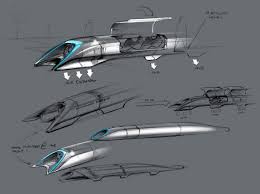
How would you like to go from Los Angeles to San Francisco in less than 30 minutes, paying less than what you would pay for a plane ticket? If the “Hyperloop” concept is adopted as a fifth mode of transportation – alongside cars, trains, planes and boats – it could revolutionize travel, especially for distances separated by 900 miles or less.

Elon Musk, the visionary behind the electric car-firm Tesla and spaceflight company SpaceX, has described his Hyperloop concept as “a cross between a Concorde (supersonic plane), a rail gun and an air hockey table.”

“I originally started thinking about [Hyperloop] when I read about California’s high-speed rail project, which was somewhat disappointing,” said Musk at a Google Hangout with Richard Branson.

“It’s actually worse than taking the plane. I get a little sad when things are not getting better in the future,” Musk said. “Another example would be like the Concorde being retired and the fact there is no supersonic passenger transport. I think that is sad. You want the future to be better than the past, or at least I do. ”

Here are some interesting snippets about the Hyperloop:

  • The recently unveiled plans were developed by engineers from Tesla and SpaceX.
  • The Hyperloop will sit in electromagnetic tubes that will run along the I-5 corridor (with several exceptions).
  • Travel speed of the Hyperloop: 800 miles per hour.
  • A safer mode of transportation than a plane or a train.
  • Will incorporate technology used in the Tesla Model S battery packs.
  • The ride will be similar to an airplane ride.
  • It will be about seven years before it becomes available.

“You want a transport system that is roughly twice as fast as the next best alternative, that costs less, that is safer, that is not subject to weather and is more convenient,” Musk said.

The Hyperloop will cost around $6 billion, “more than Tesla, SpaceX and Solar City have spent, combined.”

Hyperloop plans are based on an open-source design, letting anyone use or modify them. Given that, it seems safe to assume the Hyperloop has a way to go before becoming reality.

The visionary already has a lot on his plate. “I don’t have any plans to execute, because I must remain focused on SpaceX and Tesla,” said Musk, according to the Associated Press.

Musk will invest his own money in the project, and hopes that others will, too.

My Digital Universe

German Grand Prix may avoid dangerous tire woes

After an exciting and dangerous race in Silverstone, England, Formula 1 fans, drivers and teams are eagerly awaiting the Santander-sponsored German Gran Prix in Nürburgring this weekend (July 6-7).

Triple World Champion Sebastian Vettel (Red Bull) still leads the driver standings with 132 points, while Fernando Alonso(Ferrari, sponsored by Banco Santander) and Kimi Räikkönen(Lotus) trail him with 111 and 98 points, respectively.

The Santander-sponsored Formula 1 race in Silverstone, England, caused much controversy due to several rear-left tire failures that resulted in explosions.

Lewis Hamilton (Mercedes), Felipe Massa (Ferrari), Jean-Eric Vergne (Toro Ross) and Sergio Pérez (McLaren) all suffered from tire issues, while Nico Rosberg (Mercedes) claimed his second win this season by 0.7 seconds. Perez is a Santander-sponsored driver.

Since then, several Formula 1 drivers have expressed mixed feelings about the changes and safety.

“Now, our greatest concern revolves around safety. Even if I can’t really tell what happened, it’s unacceptable having to drive knowing you are not safe,” Massa said. “Even if, luckily, nothing serious happened, what we saw is very dangerous.”

The Silverstone tire burst nearly created a crash between Lewis Hamilton, who was leading the race, and Felipe Massa. Luckily, all drivers came out of the race unharmed.

To ensure the safety of the drivers, Pirelli will use Kevlar-belted tires that were recently tested in Canada in the German Grand Prix.

A new range of tires will be introduced for the Formula 1 Grand Prix in Budapest, Hungary.

The tires used in Silverstone were different from the ones used in previous races, with Pirelli introducing a stronger bonding process in an attempt to prevent tire failures that occurred earlier in the season. Pirelli, the world’s fifth-largest tire manufacturer, has been sole supplier for Formula 1 since 2011, and its contract is due to expire at the end of this season.

My Digital Universe

Top 5 Formula 1 Teams

Two Santander-sponsored Formula 1 races, Santander British Grand Prix (June 28-30) at Silverstone and Grosser Preis Santander Von Deutschland (July 6-7) at Nurburgring in Germany, will provide the top teams an opportunity to edge closer to the coveted season championship at the season’s midpoint.

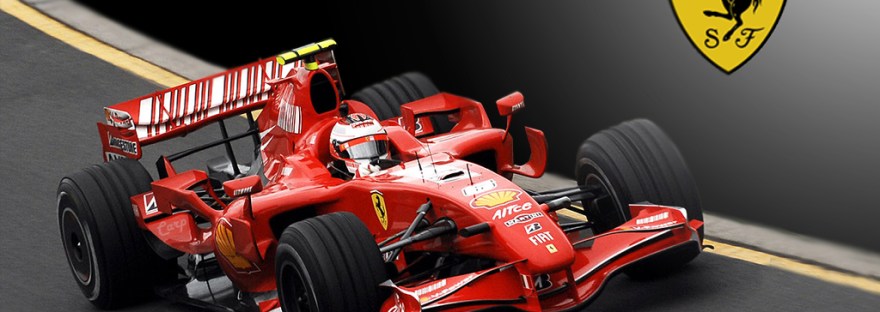
Those teams include Ferrari with Fernando Alonso and Felipe Massa, sponsored by European-based banking giant, Santander.

In addition to the Ferrari racing team, Santander sponsors the McLaren team drivers.

Here are the top five teams and points in this year’s competition:

Red Bull (201 points)

The team made their grand prix debut in 2005. The Red Bull driving prodigy, Sebastian Vettel, is a key figure in this team that has won the World Championship in the past three seasons. Vettel graduated from the Red Bull Junior squad and made his debut for Red Bull Racing in 2009. Since then, he has 29 wins for the team.

Drivers: Sebastian Vettel (132 points) and Mark Webber (69).

Ferrari (145)

Santander sponsored Ferrari team’s first season was in 1950, with the beginning of Formula 1 World Championship. Ferrari has won 16 championships since then, with the last coming in 2007. Since then, the team has had three near misses – the latest in 2010 with Fernando Alonso. A technical reorganization and Alonso’s performance last year – he finished second to Vettel by three points – makes this season an interesting one for Ferrari.

Drivers: Fernando Alonso (96) and Felipe Massa (49).

Mercedes (134)

The team has not won a championship since their first Formula 1 season in 2010. With the arrival of Lewis Hamilton, 2008 champion, the team is under increased pressure for good results. Even though the team’s chassis, the F1 W04 was proven to be fast, tire wear issues because of the chassis may hinder the team’s performance this year. Hamilton has been playing second fiddle to teammate Nico Rosberg, who won the Grand Prix De Monaco.

Drivers: Lewis Hamilton (77) and Nico Rosberg (57).

Lotus (114)

Since its first season in 1981, the team has managed to win two world championships. The team’s personnel have experience winning titles with Fernando Alonso, when Alonso was a part of Lotus before joining Santander-sponsored Ferrari. The team’s tight budget seems to be a limitation, but they remain a major force in the championship run.

Drivers: Kimi Räikkönen (88) and Romain Grosjean (26).

McLaren (37)

McLaren entered Formula 1 in 1966 and have won eight constructors’ and 12 drivers’ world championships. This year, they have gone against the wind by designing a completely new car. McLaren team’s performance without Lewis Hamilton, who will be racing for team Mercedes, remains to be seen as the season continues to unfold.

Drivers: Jenson Button (25) and Sergio Pérez (12).

To read more about Formula 1 history, click here: https://www.santanderconsumerusa.com/blog/formula-1-racing-is-quick-exciting-dangerous/

To read about this year’s top competitors, click here: https://www.santanderconsumerusa.com/blog/who-will-win-the-2013-formula-one/

My Digital Universe

Fascinating Formula1 History

Formula 1 auto racing undoubtedly is one of the quickest and exciting sporting events in the world.

As Formula 1 fans await the upcoming Santander sponsored races: Santander British Grand Prix (June 28-30) and Grosser Preis Santander Von Deutschland (July 5-7), following is some historical information about F1– especially since the next race will be in Silverstone, England, where the first official F1 World Championship took place in 1950.

Santander entered into Formula 1  sponsorship with TeamVodafone McLaren Mercedes in 2007, and has celebrated 14 race wins and one F1 World Championship with the team. In 2009, in its quest to become a truly global player, Santander signed a five-year sponsorship deal with Ferrari and in 2012, extended the alliance to 2017.

Ron Howard’s biopic, Rush, due out this year, will recount the renowned rivalry between James Hunt and Niki Lauda, which lead to a crash that left Lauda with severe facial scarring. The movie is set in the 70’s, but F1 history runs much further back.

Formula 1 emerged from the European racing scene during the inter-war years, with its roots running back to the early days of motor racing. But, as exciting and nerve wrecking Formula1 is, the death toll of the series is hard to ignore – especially during the early years. Between 1952 and 1994, 38 Formula 1 drivers were killed during championship races.

The first Formula1 race took place in Pau, France and the first official Formula1 World Championship race took place in Silverstone, England, in 1950.

Giuseppe (“Nino”) Farina won the inaugural title in 1950. Juan Manuel Fangio soon became a key figure, winning with five different manufacturers in the 1950s. Pre-war manufacturers like Alfa Romeo, Ferrari, Maserati and Mercedes Benz dominated the race, even though there were many drivers who owned and operated their own cars.

As manufacturers continued to make technological advancements, a constructor’s championship for companies producing an engine or chassis was introduced in 1958.

Highlighted by nine driver’s championships among British and Commonwealth drivers and the ten constructor’s titles won by British teams, 1962-1973 is considered the British era of dominance, where the British Racing Green Lotus emerged as the dominant car. From 1984 to 2008, McLaren, Williams, Renault and Ferrari won every world championship.

Michael Schumacher and Ferrari made a name for themselves in Formula 1 history by winning five consecutive driver’s championships and six consecutive constructor’s championships between 1999 and 2004. In 2005, Fernando Alonsoended Schumacher’s five year dominance and won the championship with Renault, becoming the youngest driver to win the championship. In 2008, Lewis Hamilton won the Championship and replaced Alonso as the youngest driver to win the World Championship.

This year, Santander sponsored Ferrari’s Alonso and Mercedes’ Lewis Hamilton battle again for the coveted title, as they attempt to dethrone the triple World Champion, Sebastian Vettel.


My Digital Universe

Who will win 2013 Formula1?

Will Fernando Alonso of Ferrari, sponsored by Santander, or LotusKimi Räikkönendethrone Red Bull Racing’s defending triple-time World Champion Sebastian Vettel? Or, will Lewis Hamilton pull off a shocker for Mercedes?

If you are a hard-core Formula 1 fan, you may already have your own opinion as to who will win this year’s championship. Even if you are not a Formula 1 expert, a glance at the F1 standings will give you a general idea of which teams are most likely to win.

Looking at the current standings and based on the developments so far, the driver’s championship will be a three-way battle between Alonso, Vettel and Räikkönen. But that said, those who are more familiar with Formula 1 know how unpredictable this competition can be. Especially since we are not even halfway into the season yet.

Red Bull Racing’s Vettel and Ferrari’s Alonso appear to be the strongest contenders for this year’s title. However, this season has been as unpredictable as last year. Lotus’ Räikkönen, a previous World Champion, has shown that he is in to win the title, too – the Lotus-Renault package has managed tire wear well.

Tires continue to play an important role in this year’s competition. Due to the high degradation ofPirelli tires, drivers are required to make the tires last longer to win, and the team to master this art is most likely to win the competition.

So far, the McLaren’s lack of pace has been a shocker because the team was expected to be one of the top contenders. Team Mercedes has performed better than last year, but still shows signs of persistent tire issues.

In addition to the Ferrari racing team, Santander sponsors the McLaren team drivers.

We want to wish the best of luck to Alonso and seventh-place Felipe Massa (team Ferrari), andJenson Button and Sergio Pérez (team McLaren). Button, currently 10th with 25 points is looking forward to the Canadian Grand Prix, where he scored an impressive victory in 2011. His teammate Pérez is in 12th place with 12 points.

Alonso’s Spanish Grand Prix win was exciting and has increased his chances of winning the coveted title. Alonso, the two-time World Champion, recorded his second win of the season in style at the Circuit de Catalunya while his Brazilian teammate, Massa finished third, ahead of the defending World Champion Vettel.

Miscellaneous, My Digital Universe

My Sri Lankan road trip

I come from a family that loves the open road. During road trips, my two siblings and I gave my parents a headache from the time we got into our minivan. I remember packing little snacks and claiming the window seat, every time! I liked to put down the window and feel the cool breeze run across my face. In Sri Lanka, where I grew up, you could smell the ocean when you got close to the coast and smell tea when you got close to the mountains.

I live in the U.S. now, but recently my whole family went back to Sri Lanka. The kids were all grown up and the love of the open road had only gotten stronger over the years. We have been out of the country for some time and were excited to be back on the road where cattle, monkeys and even elephants made frequent appearances.

Driving in Sri Lanka is very different than driving in America. For one, people drive on the opposite side of the road (like they do in England). Unlike the straight, flat roads in Texas, Sri Lankan roads are bumpy, winding, narrow and full of surprises. Depending on which part of the island you are driving through, you can expect to see scenic mountain views with lavish waterfalls, white-sand beaches, landscaped tea estates and herds of elephants crossing the road! Ah, and… coconut trees–they are everywhere!

Everything about a Sri Lankan road trip is amazing. There are road-side vendors selling all sorts of exotic fruits, hand-made crafts, pottery, furniture, souvenirs, etc. You’ll also see cattle, water buffalo and elephants crossing the road at their leisure–so you have to watch out! And I love the paths in central Sri Lanka that are surrounded by green paddy fields and tall pine trees found at higher altitudes.

My family loves to make pit stops during road trips. It offers a chance to get out and take a few pictures or buy some fruit from a roadside vendor. When we were visiting the eastern coast of Sri Lanka on our last trip, we saw some fishermen bringing in their daily catch. So we pulled over and gave them a hand. Pulling a net full of fish is a community activity. A rhythmic dance-like movement helps the fishermen pull their catch ashore. The net is so heavy!

If you ever get a chance to visit this beautiful island, I can guarantee you one thing: you will not be bored. It is an adventure that will take you into a world of “exotic overload.”

By Cheran Ratnam

If you have a road-trip experience you want to share, tell us about it at scusasocial@gmail.com, RoadLoans would love to go along for the ride. Don’t forget to send pictures.

My Digital Universe, Portfolio

Influence of Framing Theory in Public Relations

What is framing?

Framing plays an important role in the age of media overload. Yet, there is a lack of a clear definition for framing theory. However, there are quite a few academic studies that analyze how framing is used by public relations professionals and the news media. In news media and public relations practices, frame holder’s strategically attempts to influence and shape how audiences perceive and comprehend situations, events, and products through persuasion, inclusion or exclusion of facts (Hallahan, K. 1999; Lim, J., & Jones, L. 2010; Lundy, L. K. 2006;Waller, R. L., & Conaway, R. N. 2011; Schultz, F., Kleinnijenhuis, J., Oegema, D., Utz, S., & van Atteveldt, W. 2012).

“Frames are designed to deliberately reconstitute selected aspects of reality surrounding deliberation of a public issue. In essence, a frame binds together carefully chosen ideas, information, judgments, arguments, claims, and value statements into a tightly compressed noetic narrative that guides the frameholder’s interpretation of events as well as discourse related to a given topic (Entman, 2007; Price, Tewksbury, & Powers, 1997; Schlechtweg, 1996)” (Waller, R. L., & Conaway, R. N. 2011, p. 87).

Framing and interpretation

Since frames carry the framholder’s interpretation, parties with different points of view and values can use framing to propagate, justify, and defend self-interests. This “adjustable” nature of framing makes it a very influential and sought out tool in communication strategies.

Framing operates through cognitive, rhetorical, and ideological processes. In cognitive processing, framing includes ideas and facts that are beneficial to the frame’s core theme, while excluding ideas and facts that are negative. The  rhetorical process suggests and hints at how the idea should be interpreted using similes, metaphors, descriptions, and illustrations (Hallahan, K. 1999;Waller, R. L., & Conaway, R. N. 2011). Finally, “On an ideological level, frames contain information on how a society works—or should work—as well as the proper relationship among its members; frames contain fundamental assumptions regarding social priorities and problems (Kendall, 2005; Schlechtweg, 1996)”(Waller, R. L., & Conaway, R. N. 2011, p. 87).

Framing theory and mass media

As the power of the media empire continues to expand with each new technological innovation, organizations are constantly in a battle with external actors such as the news media and activists to frame a company’s actions, especially during a crisis. Since communication is an integral part of effective public relations, framing is used in crisis communication strategies and marketing campaigns to defend, promote, and expand organizational interest.

“Implicitly, framing plays an integral role in public relations. If public relations is defined as the process of establishing and maintaining mutually beneficial relations between an organization and publics on whom it depends (Cutlip, Center, & Broom, 1995), the establishment of common frames of reference about topics or issues of mutual concern is a necessary condition for effective relations to be established” (Hallahan, K. 1999, p. 207).

The public relations strategies employed in the Nike sweatshop scandal and the BP oil spill crisis provide practical insight into how framing can be used to frame and counter-frame a crisis.

Framing Nike – Public Relations

Nike came into dominance in the sports shoe market ousting its competitors through a well-developed marketing strategy. Nike continued to expand through outsourcing jobs to Asia and soon came under fire by labor unions, activists, and mainstream media for its questionable labor practices. Nike’s first response was to reject the accusations but initiatives to protect the brand image led to the creation of a counter strategy: “That is, the Eitel team had to counterframe the debate on the labor practices of the company’s Asian contractors as well as the treatment of the young female workers employed in those Asian factories in order to preserve and enhance its reputation for social responsibility and, thereby, to protect its brand equity”(Waller, R. L., & Conaway, R. N. 2011, p. 94).

The news media continued to frame the issue using injustice and identity frames which targeted the Nike CEO and portrayed a corporate giant that had little regard for the plight of its poor workers: “The three major frames in the anti- Nike campaign were identified as follows: negative identity frames, collective action injustice frames, and negative consequence frames”(Waller, R. L., & Conaway, R. N. 2011, p. 96). Nike countered the process using positive identity frames, collective action remediation frames, and positive consequence frames.

Eventually, Nike recovered its image and won over media and its stakeholders by reframing the debate. In this case, the anti- Nike campaign’s framing was defeated by Nike’s counter-framing strategy: “Under Nike corporate Vice President Eitel, the company adroitly counterattacked with thematic frames that greatly reduced the emotional intensity of the whole debate on the company’s labor-related issues” (Waller, R. L., & Conaway, R. N. 2011, p. 103). In this framing war, Nike took on the offensive to counter the allegations and framed its approach using a variety of methods that highlighted the company’s positive actions and dedication to enforce fair labor practices in its Asian production facilities and avoided discussing negative aspects of its past practices.

The BP oil spill crisis is yet another example of a framing battle between the news media and an organization. Here, BP oil frames the company as an agent that is dedicated to solving the crisis and purposefully leaves out and downplays its involvement and responsibility for the oil spill (Schultz, F et al. 2012).

BP time and again brought new technological solutions with symbolic and impressive names (“top kill”, “static kill”) to the front, creating a perception that these initiatives could help stop the oil spill. By that, and by not relating other actors (e.g., the White House) to the cause and problem itself, BP presented that they could become solution providers. “This strategy of decoupling the problem from the corporation’s activities, from the solutions, and furthermore from solution providers, can be described as a “decoupling strategy”(Schultz, F et al. 2012, p.103).

Here, the decoupling strategy is used to reframe the crisis in a way that will portray the company as an agent that is dedicated to fixing the oil spill rather than operating under the news media frame that depicts the crisis as a consequence of corporate greed and mismanagement of natural resources by giant corporations.

In the context of framing, organizations sometimes must compete with opposing forces to determine how the news media frames the organization amidst a crisis. However, news media can be swayed over by strategic public relations campaigns that counter the opposing forces such as activists. While news media is a much stronger force when it comes to framing, it is also susceptible to third party influences. In the two cases discussed above, both Nike and BP attempted to influence how the news media framed the issue while those who were accusing the companies attempted to frame the issues and facts in a way that will further their agenda. There was a well-established coalition that wanted to influence the media coverage in a way that would favor Nike’s opposition (Waller, R. L., & Conaway, R. N. 2011). On the other hand, “Crisis managers will strive to define the situation, that is, whether the events that occurred actually constitute a crisis (situational framing). Certain attributes of a crisis might be emphasized or de-emphasized, such as the steps being taken to correct a problem (attribute framing)” (Hallahan, K. 1999, p. 229).

Framing during a crisis

Furthermore, in crisis situations public relations professionals must be prepared “to address the underlying issues behind the crisis (issue framing) as well as the cause and potential explanations of responsibility (responsibility framing)” (Hallahan, K. 1999, p. 229). In the BP oil spill crises, the company avoided addressing the responsibility frame and focused on issue framing and built a campaign highlighting the actions the company took to solve the issue.

“Frame competition indicates that different frames with varying degrees of magnitude are present in reality so that individuals consume those competitive frames simultaneously” (Lim, J., & Jones, L. 2010, p. 296). The competing frames affect the public as well as the news media and knowing how to work with competing frames and influencing the news frame with the organizational frame during a crisis will enable an organization to bounce back after a major crisis.

How a company handles a crisis will determine its future. Therefore, crisis management is an important aspect of public relations and framing plays a major role in how the public views and understands the crisis. By entering the arena where issues are framed and presented to the public, an organization has the opportunity to compete with factors that will determine how the company’s role is portrayed to the public. The importance of paying attention to the news media frame of an issue and being able to influence it in a way that will benefit the company is easier said than done. However, as Nike and BP have demonstrated, framing can be used to a company’s advantage if the public relations department plays the right cards at the right time.

References: APA 6th Edition

Hallahan, K. (1999). Seven Models of Framing: Implications for Public

Relations.Journal Of Public Relations Research11(3), 205-242.

Lim, J., & Jones, L. (2010). A baseline summary of framing research in public

relations from 1990 to 2009. Public Relations Review36(3), 292-297. doi:10.1016/j.pubrev.2010.05.003

Lundy, L. K. (2006). Effect of framing on cognitive processing in public

relations.Public Relations Review32(3), 295-301. doi:10.1016/j.pubrev.2006.05.021

Schultz, F., Kleinnijenhuis, J., Oegema, D., Utz, S., & van Atteveldt, W. (2012). Strategic

framing in the BP crisis: A semantic network analysis of associative frames.Public Relations Review38(1), 97-107. doi:10.1016/j.pubrev.2011.08.003

Waller, R. L., & Conaway, R. N. (2011). Framing and Counterframing the Issue of

Corporate Social Responsibility. Journal Of Business Communication48(1), 83-106. doi:10.1177/0021943610389752

My Digital Universe, Poems, Portfolio

Tale- the bitter old man.

You meet them, you talk to them.

It’s like talking to a brick wall. Your voice just bounces back, except these wretched walls can actually talk.

High and important are their attire, but I unravel them with my satire.

Oh good one old man!

Old man? You little fart! You think you know so much! You think you can just conquer and build and re-produce all you want?
Life will tease you like a fly
Unclothe you and leave you out to die.
Too late! Too late! Then, say I,
And leave a wet fart … with a smile!

Mr. whatever your name is, I have heard jolly well all your old dragon mysteries and boogie-boy adventures. I think it’s finally time for you to start reading some “real” books with “real” knowledge. And just for the record, my old man was once cursed. They said he would never have offspring … Was I dropped from the sky? Or I am some devil?

Ya, ya, ya, chew on that goat marrow,
Maybe it’ll rid away your sorrows.
When the gate opens tomorrow.
And of course your gates must be all rusty! Oops!

You disgusting little rat! If I can find my glasses, I will come show you what this rusty old man can do to your virgin gates, when my foot …

Ha ha ha old man Tail still has some hate left in that rotten mouth of his. Get him another Beer! And gentlemen, this one is on me.

Old and wretched, filthy and drunk,
Drags his soul like a miserable skunk.
Shunned by love, disowned by his own,
He’s lost hope, yet he refuses to bow.

Opens the door and reaches for the light,
There’s not a soul on his weary sight.
Walks over to his old wooden chair,
Mutters a few words, then lets out some air.

He lived alone; no one knew where he came from or what he did. He would always go to the market and buy the freshest fruits, fill them up in his frowzy old basket. All the venders say he is a regular, who likes his veggies.

Family or visitors, his neighbors have never seen,
They say he lives his life like a messed up human being.
If you talk to him, he sometimes replies,
And everything you know he persuades you to deny.

He was best known for his stories of old,
With great enactment and excitement he told.
They were made up of creed, greed and pure gold,
The more you listen, the lesser you feel bold.

It was a mystery why people despised him and yet couldn’t resist the senile laughter he brought to their senile worlds. He looked healthy for his age, but people always exclaimed that he must have weary heart.

It was past midnight and the Shimmy’s Beer House was once again filtering out. The regulars were in their regular chairs and the non-regulars were aware of what was going to happen soon.

This was never planned, but it happened these nights. It was spontaneous, yet it happened. No one knew what time or what day the old man might show up to Shimmy’s for his regular glass of beer.

There he was, in his regular clothing. Nothing too fancy nothing too shaggy. His clothes fit him like his wrinkly old skin. He seemed to be in his expected attitude. Minding his own business and concentrating on eating his food. Rarely, he would turn around to see what has happened around him or to see something that he thinks is utterly stupid or outrageous! It was understood that one shouldn’t take offense to the words of the old man or take them seriously. He was to laugh at and to criticize. He got another beer, he didn’t even have to ask, it was right there.
He had been waited by the same waiter ever since he moved into town. He had never had any conversations with the waiter other than about something on the menu or ordering food. The waiter didn’t complain and said that “he leaves you a good tip, I remember during the recession he would leave the same amount. He used to complain the first couple of times, but after a while, I think the crew figured out how he likes his food. So now, he simply nods his head after he tastes it and you know you’re good to go”.

In came a figure, in his eyes he showed no fear.
His pride filled the room, while his stature took up space.
He looked around condescendingly, and made his way to the table.

Hey old man! How are you?

He grins, but doesn’t bother to look up, and says “what do you want? You fancy pantsie? If you don’t move, you will get your ass kicked!”

Tail Grinch! I can’t believe you turned out to be the real Grinch!

You look well. Waiter, get me two beers and this tab is on me.

There he was that fateful day,
Made of useless knowledge, covered up with clay.
Life he thought was a thing he could play,
But there he was acting like a chick with a brain delay.

Was he startled? No! He seemed to be back in his zone.
As the stranger adjusted his chair and thought of a tone.
For he knew the old man from old, till the day he was gone.
Adjusting his voice, adjusting his stature, as the old man’s eyes shone.

“To let go is to free your hands,
Let it go, remember the falling dance?”
Those were the words that echoed inside the old man’s head. Who said them and why, is a mystery. One thing was clear, the old man was not going to confront his peer.

I Spoke to your folks yesterday. They say you’re still unbearable. They don’t seem to be very fond of you, Tale. Tale doesn’t stop his rhythmic chewing; he just keeps chewing as if nothing was said.

How do you survive on your own? You have no one to take care of you. Your stubbornness still seems to be driving you. Pride and arrogance, my friend, shouldn’t be your companions!

Ya, keep ignoring!

The more you ignore others, the more they ignore you.

You are nothing!

Look at you!

You are still wearing your same rugged old clothes and your wretched attitude.

You think you’re loved in this place?

You think all these people listen to your groans and stupid stories because they secretly love you?

They don’t give a flip about you!

In fact, they think you’re some old man with a retirement … a messed up old log!

Who has nothing! Who means nothing! Is that what you want?

Tale!

would you say something?

Look, I don’t know why you refuse to even acknowledge my presence, but just so you know, I quit man!

I quit this damn life! I have no one.

No one to talk to, and no one to care for.

Tale?

This day is new, but the sun is old,
Let’s go dig for unknown gold …

You remember we used to sing that song when we started our quests?

Life seemed worthwhile back then. I am going to find that spark again man. Yes!

I will!

Are you with me?

Talk to me!

He was still there. His mouth still kept the same rhythm,
Not a beat did he miss, not a smile on his face.
He was alone again and kept looking straight ahead,
In his own world, in his own misery, words are what made him a mystery.

Nice seeing you Tale!

Take care! If you change your mind, come to my place and dine!

Picks up his jacket, tips the waiter,
No one knew that they wouldn’t see him later.
He has not always been mean and bitter,
Now, he’s just an old rag, awaiting none, but litter.

Lost everything he ever wanted,
Trying to gain what he lacked.
He threw away his life he had stacked.
Hands on the wheel, his death was now packed.

No one knew where he went. There was no way to track him. His house was burnt down and was found by a wild hound. The passers by picked up the left-over gold in pounds.

It’s the bitter old man’s house, where he lived like a dead mouse.

Now it is ashes falling on the audiences’ eye lashes.

The news said that he burnt his house down, in remorse.

A thief! They said. He was living in the out skirts of popularity, deserving no charity other than the death penalty.

His parting was a mystery and it was said that he was nothing but a misery. But the contents he left behind showed signs of wealth and prosperity.

It looked like a pile of dirt, except for the melted gold,
Which was only available for the fit and the not so old.

There were many who made their way to look at the burnt old house. The one’s who got their first, said the gold was pure and true.

One thing was certain that eventful day, where many a man got new clothes from the old man’s gold.

Smiles were on people’s faces and no one bothered to write a thank you note.
On a boat, sailing with nothing on, except an old coat.
There he sat smiling and singing as he got away from the coast.
Years went by, till one day a boy found a leg, it was roast!
He picked it up, since he knew that it’d give him something to boast.

The boy took the leg, it was stinky and foul. He took a picture of it. His mom thought he was nuts, his dad … Well he’d like to know if there was another one. He said he will give it a burial.

These words were written boldly on the old man’s leg, and he memorized them with all his might:

“There’s a fat guy you’ll never see,
The world you see is His make believe.
He laughs and farts as often as you breath,
Since Life is something that he writes on a sheet.

If you ask him what are we to do with life?
He’ll give you a list, to do till you die.
He’ll label some to be nice and some to be vile,
And say: Life is a joke! It’s your turn to make me smile!”